Lyens Beauty
Cellulite is common, but its dimples can be frustrating when they remain visible despite exercise and healthy routines. EMS devices send electrical impulses through skin electrodes, causing muscles to contract. Some China-made models combine EMS with heat, suction, or massage, which can make product claims sound more convincing than the evidence warrants. But do they change cellulite itself?
This guide looks at what popular EMS devices offer, how their features differ, and what buyers should check before choosing one. It also asks the question many shoppers type: “does ems muscle stimulation help with cellulite”. The careful answer is that muscle stimulation may support muscle conditioning, but it has not been shown to reliably remove cellulite. Temporary changes in skin appearance may also come from massage, fluid shifts, or lighting. That distinction is easy to miss.
We’ll focus on practical details: electrode placement, adjustable intensity, session length, cleaning, and clear safety instructions. A device that feels strong is not automatically more effective. Nor does a polished product page prove clinical results. Look for transparent specifications and evidence that matches the exact device, rather than broad promises about EMS in general. Individual results can vary, and the research has limits. Some claims are still uncertain. This overview is informational, not a substitute for medical advice; people with health conditions or implanted electronic devices should consult a qualified professional before using electrical stimulation.
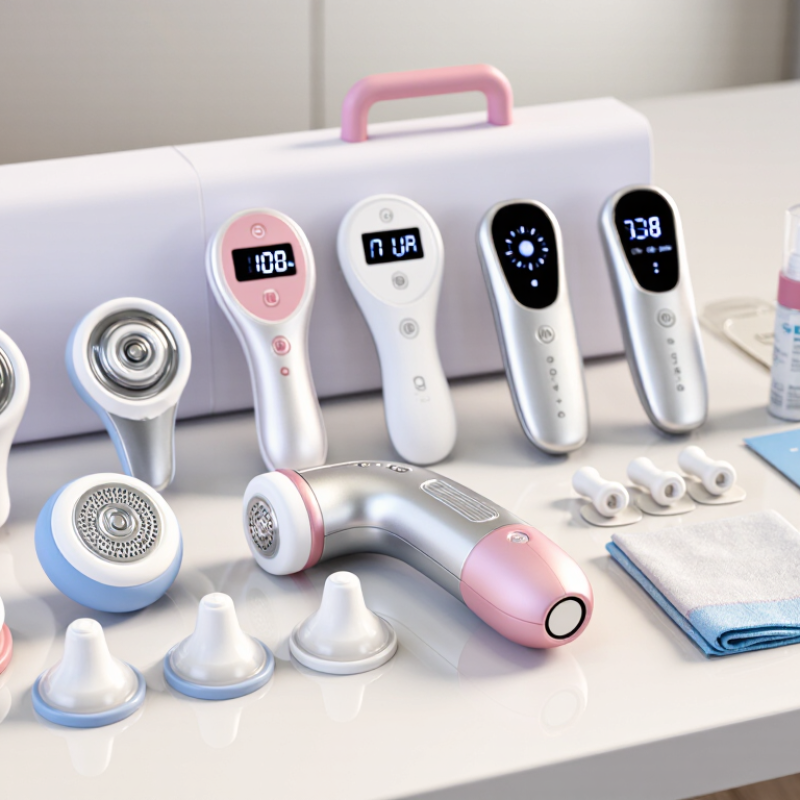
Electrical muscle stimulation (EMS) sends low-level electrical pulses through skin electrodes. These pulses activate motor nerves, making nearby muscles contract. Users may feel a rhythmic twitch beneath the pads. The sensation is muscle work, not fat melting.
Cellulite involves more than muscle tone. Fibrous bands beneath the skin can pull downward while fat lobules push upward, creating dimples. The American Academy of Dermatology reports that cellulite affects 80–90% of women after puberty. EMS targets muscle, not those bands. That distinction matters.
The U.S. Food and Drug Administration says EMS devices may temporarily strengthen, tone, or firm muscles, but they do not cause significant weight loss or reduce body girth. This guidance does not establish EMS as a cellulite treatment. A stronger muscle might change the area’s appearance for some users, but smoother skin is not guaranteed. The evidence is easy to overread. If a device causes pain, persistent redness, or unusual discomfort, stop using it and seek professional advice.
Electrical muscle stimulation (EMS) sends controlled pulses through skin electrodes, prompting nearby muscles to contract. During a session, you may feel rhythmic tightening in your thighs or buttocks, sometimes with mild tingling.
These contractions can support muscle conditioning, but they do not directly dissolve the fat or connective tissue associated with cellulite. Cellulite is common and influenced by tissue structure, genetics, and skin thickness. Stronger muscles may subtly change the area’s contour. They cannot guarantee smoother skin.
A useful reality check: evidence for EMS specifically improving cellulite is limited, and results can vary. Any change may be modest or temporary, rather than a lasting shift in skin texture. Photos, lighting, and posture can also make differences look larger than they are.
Even the language can get ahead of the evidence. Ask a qualified health professional before using EMS if you have a medical condition, an implanted electrical device, or are pregnant. A careful provider should explain realistic outcomes, electrode placement, and possible skin irritation.
Evidence for electrical muscle stimulation (EMS) as a cellulite treatment remains limited and mixed. Clinical studies often examine muscle strength or body contouring, not cellulite specifically. Some small trials report modest changes in skin appearance after repeated sessions, but their methods and measurements vary. That distinction matters. A firmer underlying muscle may change how an area looks, yet it does not prove EMS removes the fibrous bands linked to dimpling. Results can also depend on hydration, posture, lighting, and ordinary weight shifts.
For example, a photo taken after exercise may show temporarily tighter-looking skin, with the texture becoming more visible later. Home devices differ in intensity and electrode placement; a tingling sensation alone does not confirm effective muscle contraction. Researchers need larger, well-controlled studies using objective skin assessments and follow-up beyond a few weeks. Anyone trying EMS could track the same area under similar lighting, rather than judging results from one session. People with implanted electrical devices or relevant health concerns should seek advice from a qualified clinician before use.
| Question or factor | What the evidence indicates | Practical takeaway |
|---|---|---|
| What EMS does | Electrical muscle stimulation (EMS) uses electrical impulses to trigger muscle contractions. Its established purpose is muscle stimulation; that mechanism is not the same as directly remodeling cellulite-related connective tissue. | Muscle contraction alone does not establish that an EMS device reduces cellulite. |
| What cellulite involves | Cellulite’s dimpled appearance is associated with structures beneath the skin, including fibrous connective-tissue bands and the arrangement of fat and skin. It is common and can occur at different body sizes. | A cellulite treatment needs evidence for visible skin-texture changes, not only evidence that it activates muscle. |
| Direct clinical evidence for EMS | There is not strong, consistent clinical evidence that EMS alone produces a reliable reduction in cellulite. Published research on cellulite treatments varies in design, measurement methods, and follow-up, making comparisons difficult. | Claims of proven or permanent cellulite removal by EMS are not supported by robust evidence. |
| Possible appearance changes | Muscle conditioning may change muscle tone or body contour in some users. Any resulting change in the appearance of cellulite should not be assumed to represent a lasting change to the underlying cellulite structures. | Separate muscle-toning outcomes from cellulite-specific outcomes when evaluating results. |
| EMS versus electromagnetic muscle stimulation | Direct electrical stimulation and electromagnetic devices that induce muscle contractions are different technologies. Evidence for one device type or treatment protocol cannot automatically be applied to another. | Check the technology used in a study and whether it measured cellulite specifically. |
| How cellulite improvement should be measured | Useful studies would use consistent cellulite severity assessments, standardized photographs, a comparison group, and follow-up after treatment ends. Short-term muscle or circumference changes are not equivalent to demonstrated cellulite reduction. | Look for controlled studies with cellulite-specific outcomes and meaningful follow-up. |
| Durability of results | For EMS used specifically to reduce cellulite, the duration of any visible improvement is not well established. | Be cautious of guarantees about permanent results or maintenance-free improvement. |
| Overall evidence assessment | Insufficient evidence for EMS as a stand-alone cellulite treatment. | EMS may stimulate muscles, but current evidence does not show that it reliably removes or substantially reduces cellulite. |
| Consumer safety considerations | Electrical stimulation can cause discomfort or skin irritation, and suitability depends on the device and the user’s health. Follow device instructions and seek medical advice when pregnant, using an implanted electronic device, or managing a relevant medical condition. | Do not use a device on damaged or irritated skin; stop if use causes pain or an unexpected reaction. |
| Evidence context | Cellulite treatment reviews, including Luebberding, Krueger, and Sadick, “Cellulite: An Evidence-Based Review” (American Journal of Clinical Dermatology, 2015), describe limitations in the evidence base across cellulite treatments. Findings for other technologies should not be presented as proof for EMS. | Treat marketing claims separately from results demonstrated in peer-reviewed clinical studies. |
When comparing EMS devices made or sold in China, separate the factory’s role from the seller’s. A seller may provide support and documentation, while the factory produces the unit. Ask who handles repairs, replacement pads, and questions after purchase. That matters.
Compare the actual specifications, not just advertised intensity. Look for adjustable levels, session timers, electrode-pad dimensions, charging details, and clear instructions. Ask for test reports that identify the exact model; a generic certificate may not tell you much. Check whether the manual explains pad placement, cleaning, and when to stop using the device. Small details count, especially when pads must stay attached during movement.
EMS can make muscles contract, but that does not establish that a device will reduce cellulite. Treat dramatic before-and-after photos as marketing, not proof. Seek clinical evidence relevant to the specific device and its intended use. Even then, comparisons are imperfect: skin contact, pad placement, and individual response vary. I would also check the return policy before buying. It is easy to overlook. Follow the device instructions, and ask a healthcare professional if you have a medical condition or are unsure whether EMS is appropriate for you.
China Top EMS Devices for Cellulite: Do They Work?
Safety, Limitations, and Realistic Results of EMS Treatments
EMS sends electrical pulses through skin electrodes, making nearby muscles contract. That visible twitch can feel convincing, but muscle activation is not the same as treating cellulite’s underlying skin and connective-tissue structure. The FDA says EMS devices are not cleared for weight loss or reducing body circumference. Its consumer update also lists reported problems, including shocks, burns, bruising, skin irritation, and pain. Not trivial.
For safety, follow the device instructions and stop if you feel pain, burning, or persistent irritation. Ask a clinician before use if you have an implanted electrical device, a relevant medical condition, or uncertainty about pregnancy-related precautions. Avoid placing electrodes over broken or irritated skin. A strong contraction is not proof of a better result; uncomfortable intensity can simply mean excessive stimulation.
Expectations should stay modest. The American Academy of Dermatology notes that cellulite treatments can have variable results, and some improvements may be temporary. EMS may strengthen muscles, which can slightly change how an area looks, but reliable evidence that it smooths cellulite itself remains limited. Take consistent photos in the same light and posture, rather than judging a small change after one session. I would not treat a short-lived tightening effect as lasting cellulite reduction.
This is a qualitative evidence summary, not a measured treatment result. EMS can trigger muscle contractions, but reliable, lasting cellulite reduction has not been established. Any visible change may be temporary, and results vary; EMS is not a proven fat-loss treatment.
It sends low-level electrical pulses through skin electrodes. These pulses make nearby muscles contract. You may feel rhythmic twitches.
No. EMS works on muscles, not the fibrous bands and fat structure linked with dimpling. Smoother skin is not guaranteed.
Stronger muscles may subtly affect the contour of thighs or buttocks. Any visual change may be modest or temporary. That distinction matters.
Evidence specifically supporting EMS for cellulite is limited. Lighting, posture, and skin contact can change how photos look. I might be overreading a small difference.
Check adjustable levels, session timers, electrode-pad size, charging details, and clear instructions. Ask for test reports tied to the exact model. Generic paperwork may tell you little.
It should show pad placement, cleaning, session use, and when to stop. Small details count. Pads can shift during movement.
Ask who handles repairs, replacement pads, and support after purchase. The seller and factory may have different roles. Check the return policy too.
Ask a qualified health professional if you have a medical condition, an implanted electrical device, or are pregnant. Stop if you feel pain, persistent redness, or unusual discomfort.
EMS devices use electrical pulses to trigger muscle contractions, which may strengthen or tone muscles and temporarily change how the skin looks. Because cellulite involves the structure of skin, connective tissue, and underlying fat, muscle stimulation is not a direct or guaranteed way to remove it. People asking “does ems muscle stimulation help with cellulite” should know that any improvement may be modest, temporary, and different from person to person.
Evidence for lasting cellulite reduction from EMS alone is limited, so expectations should remain realistic. When comparing devices made or sold in China, consider clear instructions, adjustable intensity, suitable treatment areas, and transparent safety information rather than relying on dramatic claims. EMS may cause discomfort or skin irritation, and it may not be appropriate for everyone, particularly people with certain medical conditions or implanted electronic devices. Follow the device instructions and seek professional guidance if you are unsure.
