Lyens Beauty
At-home light-based hair removal can make a bathroom routine feel surprisingly high-tech. It can also make mistakes easy. Before choosing from China’s top 10 devices, understand the difference between IPL and laser technology. They are not interchangeable, and results vary with skin tone, hair color, device design, and consistency. For safer use, start with the manufacturer’s instructions—not a social-media shortcut.
Board-certified dermatologist Dr. Hadley King emphasizes that device suitability depends on both skin tone and hair color. In practical terms, her guidance is to check the device’s approved skin-tone range and follow its instructions carefully. That matters under a bright bathroom light, with the device’s tone chart open beside you. The phrase how to use at home laser hair removal safely is not just about pressing the flash button; it starts with choosing a device that fits you.
Clean and dry the treatment area, shave if the manual advises it, and perform a patch test. Wait for the recommended period and check for irritation before treating a larger area. Never flash over tattoos, dark spots, or irritated skin unless the device explicitly permits it. Wear the specified eye protection, and stop if you feel sharp pain or notice blistering. Small steps matter. Results may take repeated sessions, and not every device suits every person. That can be frustrating. If you have a skin condition, take photosensitizing medication, or feel unsure, ask a qualified healthcare professional before starting. A careful routine is useful, but it is not a guarantee of smooth skin.
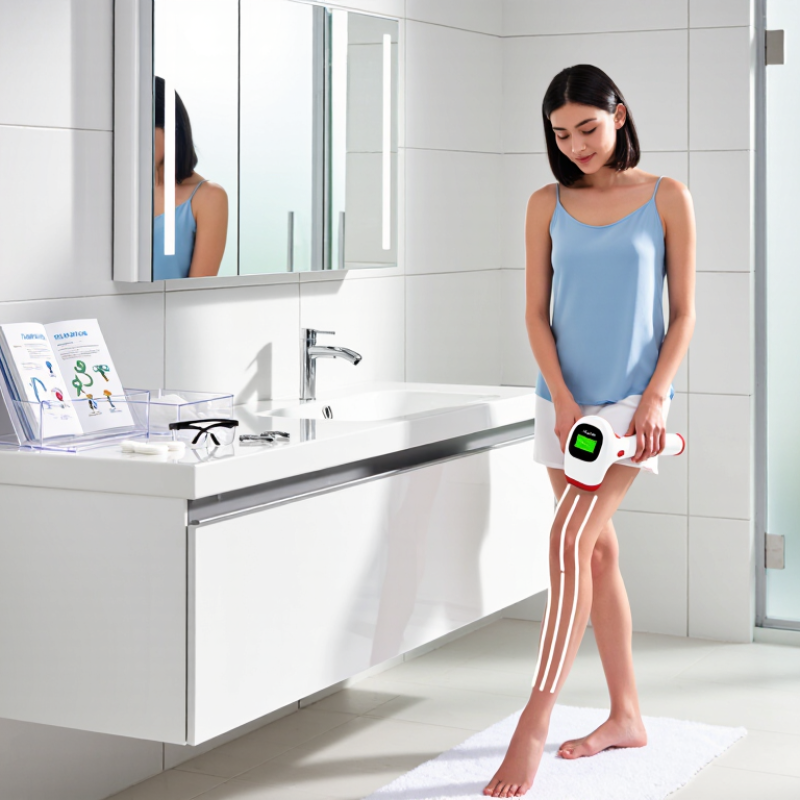
At-home hair-removal devices send light into the skin, where pigment in a hair absorbs some of its energy. Many home devices use intense pulsed light rather than a true laser. The heat can weaken active hair follicles, but it cannot treat every hair at once. Hair grows in cycles. Results usually take repeated sessions, and maintenance may be needed.
These devices tend to work best when hair is darker than the surrounding skin. Blonde, red, grey, or white hair may respond poorly because it contains less suitable pigment. Skin tone limits vary by device, so check the specific instructions rather than relying on a general chart. That matters. A setting that feels mild may still irritate skin. Test a small area first, then wait as directed before treating a larger patch.
Use only on clean, dry skin, and follow the device’s schedule and energy guidance. Avoid flashing over eyes, tattoos, or dark marks unless the instructions explicitly say otherwise. Do not treat sunburned, broken, or irritated skin. Certain medicines and skin conditions can increase sensitivity, so ask a qualified clinician if you are unsure. A common mistake is expecting smooth skin after one session; slower progress is normal, and pushing the device harder is not a shortcut.
Before using a home hair-removal device, check your skin tone and hair color in natural light. Light skin with dark hair often responds best because the treatment targets pigment in the hair. Blonde, gray, white, or red hair may respond poorly. Fitzpatrick’s widely used classification describes six skin phototypes, but it is a guide, not a guarantee. Skin tone is not the same as race. Recently tanned or sunburned skin can also raise the risk of burns or dark marks.
Read the device instructions and confirm which skin tones it is designed for. Test a small area, then wait for the period specified in the manual before treating a larger area. A small patch matters. The American Academy of Dermatology says most patients need two to six professional treatments; results and schedules vary, so home use may require patience. Do not treat irritated, wounded, or tattooed skin unless the device instructions explicitly allow it.
Review your health before starting. Photosensitive medicines, skin conditions, pregnancy, or a history of scarring may affect safety; ask a qualified clinician if unsure. Check the device’s warnings rather than guessing from a medication name. That extra pause can feel inconvenient, but guessing is not a good safety test.
Before using an at-home hair-removal device, read its instructions and check that it suits your skin tone and hair color. Clean the treatment area with mild soap, then dry it fully. Remove lotions, deodorant, and makeup. Follow the manual on shaving; many devices work best on freshly shaved skin, not skin with visible hair. Do not treat sunburned, irritated, or broken skin. Small details matter.
Choose a discreet patch of skin, such as the outer thigh, and use the setting recommended for your first session. Treat the spot once, then wait for the period stated in the manual, often 24 to 48 hours. Check for lasting redness, swelling, blistering, or unusual pain. A little warmth may occur, but discomfort is a reason to stop. I know it can feel slow to wait, but skipping this check is a poor trade-off.
Tips: Keep the skin taut and the device flat against it, if the instructions recommend that technique. Avoid tattoos, dark spots, and the eye area. Do not repeat flashes over the same spot in one session. If you have a skin condition, take medicines that increase light sensitivity, or feel unsure, ask a qualified healthcare professional before treating the area.
At-home laser hair removal requires more than pressing a button. Read the full instructions before every session, especially the eye-safety warnings. Clean, dry skin helps the light reach the target evenly. Remove creams, oils, and deodorant first. Never use the device near the eyes, eyelids, or mucous membranes. Keep children and pets away during treatment. Short flashes can still feel intense.
Protect your eyes according to the device instructions. Do not stare at the light. If approved protective eyewear is required, wear it correctly and check for cracks. Test a small patch on low intensity, then wait the recommended time. Stop if you notice blistering, severe pain, swelling, or unusual color changes. Avoid tattoos, dark moles, open wounds, irritated skin, and recently sunburned areas. A qualified dermatologist can assess uncertain skin changes or medical conditions.
Use the lowest setting that feels tolerable, not the strongest setting available. Move methodically, leaving small gaps rather than repeating flashes over one spot. I would rather miss a patch than over-treat it. Do not treat more often than instructed. Afterward, use a gentle, fragrance-free moisturizer and protect the area from direct sunlight. Avoid hot baths, saunas, and harsh exfoliation for the advised period. Keep a simple record of dates, settings, and skin reactions. It may reveal a pattern you did not notice immediately.
After a home laser or light-based hair-removal session, follow the device instructions for your skin type and treatment area. Mild warmth or redness can happen and often settles within a day. Use a cool, clean compress for a few minutes; do not put ice directly on the skin. Keep the area clean, and apply a plain, fragrance-free moisturizer if needed. Avoid hot showers, intense exercise, exfoliation, and perfumed products until irritation has eased. Protect treated skin from direct sunlight, and use broad-spectrum sunscreen on exposed areas. Keep it simple. It is easy to assume that stronger redness means a better result, but it does not.
Stop using the device on the area if pain is sharp, redness worsens, or swelling persists. Blisters, burns, crusting, or dark or pale patches are warning signs, not expected aftercare. Seek advice from a qualified healthcare professional, especially if symptoms worsen or do not improve. Get urgent care for spreading warmth, pus, fever, or severe pain. Eye pain or vision changes after a flash near the face also need prompt medical attention. Take a clear photo of any reaction and note when it began; small details can help a clinician assess what happened.
| No. | Safety Dimension | When to Apply | Recommended Practice | Reason and Key Safety Point |
|---|---|---|---|---|
| 1 | Read the device instructions | Before the first use | Confirm that the device is intended for home use, check the approved treatment areas, and follow its instructions for energy levels and session frequency. | Home light-based devices differ in wavelength, energy, cooling, and skin-tone limitations. Using settings outside the instructions can increase the risk of burns or skin injury. |
| 2 | Check skin and hair suitability | Before purchase and treatment | Review the device’s skin-tone and hair-color guidance. Do not assume that every device is suitable for very dark skin or very light, gray, red, or white hair. | These devices target pigment in the hair. High skin pigment may absorb more energy, while hair with little melanin may respond poorly and may have a higher risk of skin heating. |
| 3 | Check medical and skin conditions | Before every treatment course | Postpone treatment over sunburn, open wounds, active rashes, infections, or irritated skin. Seek medical advice if taking medicines that increase light sensitivity or if you have a relevant skin condition. | Treatment over compromised or photosensitive skin may worsen irritation, cause burns, or lead to discoloration. |
| 4 | Perform a patch test | At least 24 hours before full treatment | Use the lowest suitable setting on a small area according to the instructions. Observe the area for unusual redness, swelling, blistering, severe pain, or pigment changes before continuing. | A patch test can reveal an unexpected reaction, although it cannot guarantee that a full treatment will be risk-free. |
| 5 | Prepare the treatment area | On the treatment day | Clean and dry the skin. Remove surface hair as directed, usually by shaving rather than waxing or epilating. Avoid applying perfume, deodorant, oils, or irritating products to the area. | Removing hair from the root may reduce the device’s target, while products or residue on the skin can increase irritation or interfere with light delivery. |
| 6 | Protect the eyes and sensitive areas | During treatment | Never look directly at the flash. Use the device only when its safety sensor and contact requirements are met, and avoid the eyes, eyelids, tattoos, dark moles, and unusually pigmented spots unless the instructions specifically permit otherwise. | Intense light can injure the eyes, and concentrated energy over dark marks or tattoos can cause excessive heating. |
| 7 | Use a controlled treatment technique | During each session | Start at the lowest comfortable setting, keep the device flat against the skin, treat each spot only as often as instructed, and do not repeatedly flash the same area in one session. | Mild warmth and temporary redness can occur, but repeated pulses or excessive intensity can increase the risk of burns, swelling, and post-inflammatory color changes. |
| 8 | Follow immediate aftercare | Immediately after treatment | Apply a gentle, fragrance-free moisturizer if needed. Avoid hot baths, saunas, vigorous exercise, tight clothing, exfoliants, and irritating products for the period stated in the instructions. | Temporary warmth or mild redness may settle within a short time. Gentle skin care helps reduce friction and irritation while the skin recovers. |
| 9 | Limit sun and ultraviolet exposure | Before and after treatment | Do not treat recently tanned or sunburned skin. Protect treated areas from sunlight with clothing and broad-spectrum sunscreen when appropriate, following the product instructions. | Recent tanning increases skin pigment and may raise the risk of burns or uneven pigmentation after light-based treatment. |
| 10 | Recognize warning signs | During and after treatment | Stop using the device and seek prompt medical advice for severe or increasing pain, blistering, crusting, marked swelling, spreading redness, pus, eye symptoms, or persistent lightening or darkening of the skin. | These symptoms may indicate a burn, infection, allergic reaction, eye injury, or significant pigment change and should not be managed by continuing treatment. |
Light skin with dark hair often responds best because the treatment targets hair pigment. Blonde, gray, white, or red hair may respond poorly. Results vary.
Check the manual’s skin-tone guidance in natural light. Skin tone is not the same as race. A recent tan or sunburn can increase the risk of burns or dark marks.
Wash with mild soap and dry the skin fully. Remove lotion, deodorant, and makeup. Follow the manual’s shaving instructions; visible hair may not be suitable.
Choose a small spot, such as the outer thigh. Use the recommended first-session setting, then wait as long as the manual says, often 24 to 48 hours. Check for lasting redness, swelling, blisters, or unusual pain. A small patch matters.
Avoid irritated, wounded, or sunburned skin, and do not flash over tattoos, dark spots, or near the eyes. Do not repeat flashes over one spot in the same session.
Photosensitive medicines, skin conditions, pregnancy, and a history of scarring may affect safety. Check the device warnings and ask a qualified healthcare professional if unsure. Guessing from a medicine name is not a reliable check.
Mild warmth or redness may settle within a day. Use a cool, clean compress; never place ice directly on skin. Keep the area clean and use plain, fragrance-free moisturizer if needed. Avoid heat, intense exercise, exfoliation, and perfumed products until irritation eases. Protect exposed skin from sunlight.
Stop treatment if pain is sharp, redness worsens, or swelling persists. Blisters, burns, crusting, or dark or pale patches are warning signs. Seek medical advice if symptoms worsen or do not improve; get urgent care for fever, pus, spreading warmth, or severe pain. Take a clear photo.
At-home laser hair removal devices use light energy to target pigment in hair, which may gradually reduce regrowth when treatments are used consistently. Their effectiveness depends on factors such as hair color, skin tone, and the device’s capabilities, and they may not work well for every person or body area. Before starting, review the device instructions and consider your skin and health history. Avoid treatment on irritated or damaged skin, and seek professional advice if you are unsure whether the method is suitable for you.
To understand how to use at home laser hair removal safely, begin with clean, dry skin and perform a patch test as directed, then wait to check for a reaction. Use the device only as instructed, protect your eyes when required, and do not repeatedly flash the same spot. After treatment, follow the recommended aftercare, such as avoiding skin irritants and limiting sun exposure. Stop using the device and seek medical advice if you experience severe pain, blistering, or a persistent skin reaction.
