Lyens Beauty
As laser hair removal becomes more common, many people ask, “can you do laser hair removal over tattoos?” The wording sounds simple. The clinical answer is not. Tattoo ink can absorb laser energy intended for hair follicles, especially when the ink is dark or densely packed. That energy may create sharp heat, causing burns, blistering, scarring, or unwanted fading of the tattoo.
The American Academy of Dermatology Association explains that laser hair removal requires trained medical supervision, suitable equipment, and realistic expectations. Its guidance also notes that skin color, hair color, and treatment settings affect safety and results. Grand View Research’s 2024 Laser Hair Removal Market Report estimates strong global market growth through 2030. However, market growth does not prove that every treatment area is safe. That distinction matters.
In practice, reputable providers usually avoid firing hair-removal lasers directly over tattooed skin. They may cover the tattoo with an opaque barrier and treat the surrounding skin carefully. Small details matter, such as the tattoo’s age, pigment colors, location, and the patient’s skin tone. A consultation should include a medical history, device selection, and a conservative patch test. Sometimes, the safest answer is “not on the tattoo.” That can feel disappointing, but it reflects responsible care. Ask whether the clinician has experience treating skin around tattoos, not merely operating the device. The technology is impressive, yet it is not risk-free. A qualified dermatologist or licensed medical professional should make the final decision after examining the actual tattoo.
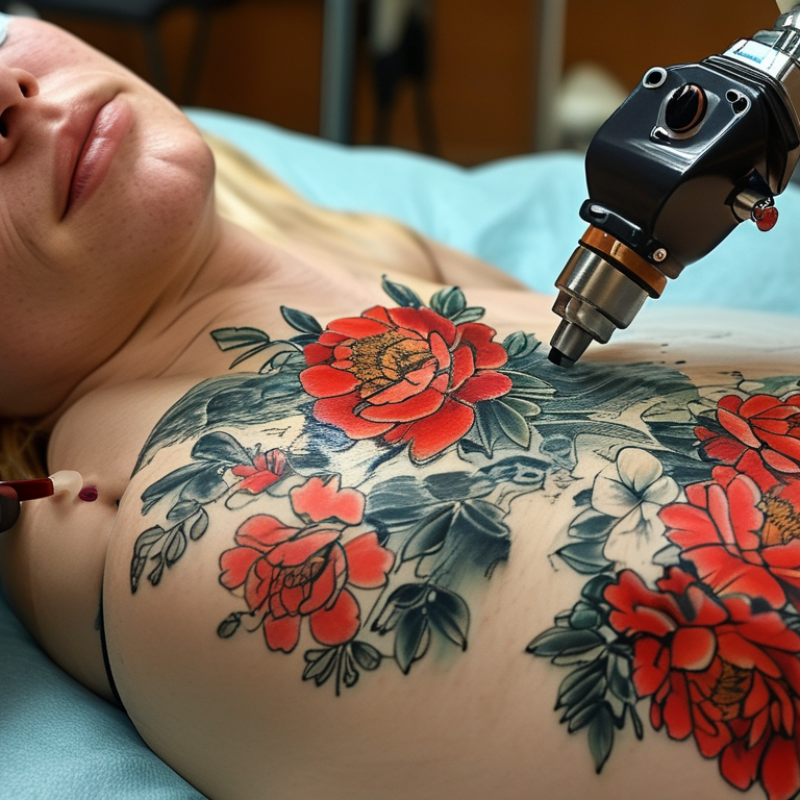
The 2026 safety consensus is clear: laser hair removal should not be performed directly over tattooed skin. Hair-removal lasers target dark pigment, but tattoo ink can absorb that energy too. The result may include sharp pain, blistering, burns, scarring, or unexpected tattoo fading. Even light-colored ink is not automatically safe. Its reaction can be difficult to predict.
A qualified clinician should inspect the tattoo’s age, colors, density, and location before treatment. The tattoo must be fully covered with an opaque barrier, while treatment stops outside its edges. A narrow safety margin matters because heat can spread into nearby ink. Eyebrow, lip, and ankle tattoos need particular care, since skin movement can expose hidden pigment. A test patch on untreated skin may help assess hair and skin response, but it cannot make tattooed areas safe.
In practice, treatment plans often remove hair around the tattoo and leave the design untouched. Shaving, trimming, or carefully chosen non-light methods may help manage hair directly over the ink. “Just one pass” is not a safe compromise. The difficult part is that tattoo pigments vary between sessions, artists, and skin layers. I would not rely on pain level alone; damage may appear hours later. Photographs, medical history, and clear aftercare instructions should guide each appointment.
Can You Do Laser Hair Removal Over Tattoos in 2026?
Laser hair removal should not be performed directly over tattooed skin. Tattoo pigments can absorb energy unpredictably, creating heat beneath the surface. This may cause burns, blistering, fading, or unwanted pigment changes. The risk depends on pigment color, density, depth, and the laser wavelength.
A 755 nm laser is strongly absorbed by dark pigments and melanin. It may heat black, blue, or deep green tattoo ink quickly. An 810 nm laser also interacts with many dark pigments, although its effect can vary with skin tone and ink composition. A 1,064 nm laser penetrates deeper and is less absorbed by surface melanin. However, it is not automatically safe over tattoos. Dark or dense ink may still absorb enough energy to injure skin. The wavelength chart helps, but it is not a safety guarantee. I would never treat a tattoo outline as harmless.
Tips: Ask a qualified laser clinician to inspect the tattoo and surrounding hair. The ink should be covered with an opaque barrier, leaving a clear margin around it. Hair beside the tattoo may be treated carefully, but the device should not overlap the ink. A small test area can reveal sensitivity, yet it cannot predict every reaction. Avoid treatment if the tattooed skin is irritated, recently altered, or healing. A conservative plan may feel slower, but protecting the skin matters more than removing a few extra hairs.
Relative interaction tendency of common tattoo pigments with 755 nm, 810 nm, and 1,064 nm hair-removal wavelengths. Dark pigments can absorb laser energy and convert it into heat, so tattooed skin should generally be covered and excluded from treatment.
Scale: 0 = low expected interaction, 5 = high expected interaction. This is a comparative educational scale based on wavelength-selective pigment absorption, not a clinical safety rating. Actual results vary with pigment chemistry, concentration, depth, skin tone, and device settings. Do not pass a hair-removal laser directly over tattoo ink without assessment by a qualified clinician.
FDA-cleared hair-removal lasers are evaluated for specific uses, not every skin tone or tattooed area. Clearance does not guarantee safety for every person. Fitzpatrick types I–III usually have lower melanin-related risk, but burns and temporary darkening can still occur. Types IV–VI need greater caution because the laser may absorb surrounding skin pigment. Experienced providers often choose longer wavelengths, lower starting energy, and gradual test spots.
Do not treat directly over tattoo ink.
Dark, blue, green, and some red pigments can absorb laser energy unexpectedly. This may cause sharp pain, blistering, scarring, or permanent pigment changes. A small untreated margin around the tattoo is safer than relying on a thin cover. Tattoo-removal lasers are different and should never be confused with hair-removal settings.
Skin assessment matters. A provider should document your Fitzpatrick type, recent tanning, medications, and tattoo colors before treatment. Protective eyewear is essential.
The test area should be checked after healing, not judged only by the first few minutes. On darker skin, cautious settings may require more sessions, which can feel disappointing. That trade-off is real.
Even with proper training, no device removes every risk. If the tattoo is close to the hairline, ask exactly how the boundary will be marked before treatment begins.
Professional screening should focus on tattoo color, ink depth, and burn risk. Laser hair removal targets pigment in the hair follicle. Tattoo ink also contains pigment, creating a competing target. Dark black and deep blue inks may absorb substantial laser energy. Red, green, and yellow inks can also react, depending on the laser wavelength and pigment mixture.
Ink depth matters. Most tattoo pigment sits within the dermis, where heat can spread beyond the follicle. However, depth cannot be confirmed by sight alone. Dense, raised, faded, or recently altered tattoos require extra caution. A clinician should record the tattoo’s age, colors, texture, and any previous reactions. Skin tone and tanning history also affect the safety assessment.
The safest approach is to avoid treating tattooed skin directly. The area should be covered with an opaque barrier, leaving a clear margin around the ink. Hair near the tattoo may need careful adjustment, not aggressive overlapping.
A conservative test patch on nearby untattooed skin can help assess the hair and skin response, but it cannot guarantee safety over ink.
Burning, blistering, pigment changes, and scarring remain possible if energy reaches the tattoo. No screening system is flawless. A professional should explain that limitation before treatment. Skin can surprise you.
Laser hair removal should not pass directly over tattooed skin. Tattoo ink can absorb laser energy, even when the design looks pale or faded. This may cause sharp pain, blistering, burns, pigment changes, or blurred artwork. A tattoo is not a reliable target map. Colors and ink depths vary within the same design. That uncertainty matters.
Safer alternatives include shaving, trimming, or carefully selected depilatory creams. Test any cream on nearby, untattooed skin first. Stop if redness, burning, or swelling develops. Waxing and threading may also work, but irritated skin should recover before treatment. Professional electrolysis can be discussed separately, because its technique differs from light-based treatment.
Protective margins are essential during laser sessions. The clinician should identify every inked area, including small dots and cosmetic tattooing. Treatment should stop outside a clearly marked border, with the margin chosen for the tattoo’s shape, color, and edge clarity. Covering the tattoo helps, but it does not make direct treatment safe. Opaque protection can shift or leave exposed edges.
Patch testing needs careful planning. Test a small hair-bearing area beside the tattoo, never on the ink itself. Record the device settings, skin response, and treatment date. Observe the area for at least 48 hours, or longer if irritation persists. A test is useful, but not a guarantee. Skin can react differently during later sessions. The safest decision comes from an experienced, qualified practitioner who examines the tattoo in person. Mistakes here may be permanent.
: No. Hair-removal lasers can heat tattoo ink and injure the skin. Possible results include burns, blisters, scarring, or fading. Keep the tattoo untouched.
Cover it with an opaque barrier. Stop treatment outside the tattoo’s edges. Leave a narrow safety margin. Heat can spread nearby.
No. Light ink can still react unpredictably. Color, density, depth, and skin tone all matter. The color chart is not a safety guarantee.
Often, yes. A qualified clinician may treat hair beside the tattoo carefully. The device should not overlap the ink. Shaving or trimming can manage hair directly over it.
Yes, but none are automatically safe over tattoos. Shorter wavelengths may heat dark ink quickly. Longer wavelengths penetrate deeper and can still injure dense pigment.
No. A test patch can show skin and hair sensitivity on untreated skin. It cannot predict every reaction inside tattooed areas. Healing may reveal damage later.
They should review tattoo age, colors, density, and location. They should also document skin type, tanning, medications, and medical history. Recent irritation needs postponement.
Watch for sharp pain, swelling, blistering, unusual darkening, or changing tattoo color. Damage may appear hours later. Pain alone is unreliable.
No. Just one pass is still exposure. Protecting the design and skin matters more than removing a few extra hairs. A slower plan may feel frustrating. I would still choose caution.
Can you do laser hair removal over tattoos? In most cases, treatment should not be performed directly on tattooed skin. Hair-removal lasers target melanin and can also be absorbed by tattoo pigments, creating heat that may cause burns, blistering, scarring, pigment changes, or damage to the tattoo. Wavelengths such as 755, 810, and 1,064 nm interact differently with ink colors and skin tones, but no wavelength makes tattooed areas risk-free. Safety also varies across Fitzpatrick skin types I–VI, with darker skin requiring especially careful settings and professional assessment.
A qualified practitioner should document the tattoo’s color, density, and likely ink depth, then leave a clear protective margin around it. Untattooed skin may be treated after a patch test, while the tattoo itself should be covered or avoided entirely. If hair removal is needed within the design, alternatives such as trimming, shaving, or carefully guided non-laser methods may be safer. Always seek an in-person evaluation before treatment and follow personalized aftercare instructions.
